
Blog
Mindset Wizardry
The magic behind thriving in a volatile, uncertain, complex, and ambiguous (VUCA) world.

Not Lazy. Not Unmotivated. Frozen.
There's a particular kind of stuck that doesn't look like stress. It looks like nothing at all.
You open the document. You read the first line. You close it again. An hour later you open it once more, read the same first line, and close it again. Nobody watching you would call this a crisis. You're not panicking. You're not scrambling. You're just... not moving. And if you've spent any time in a VUCA environment lately, you've probably lived some version of this more than once.
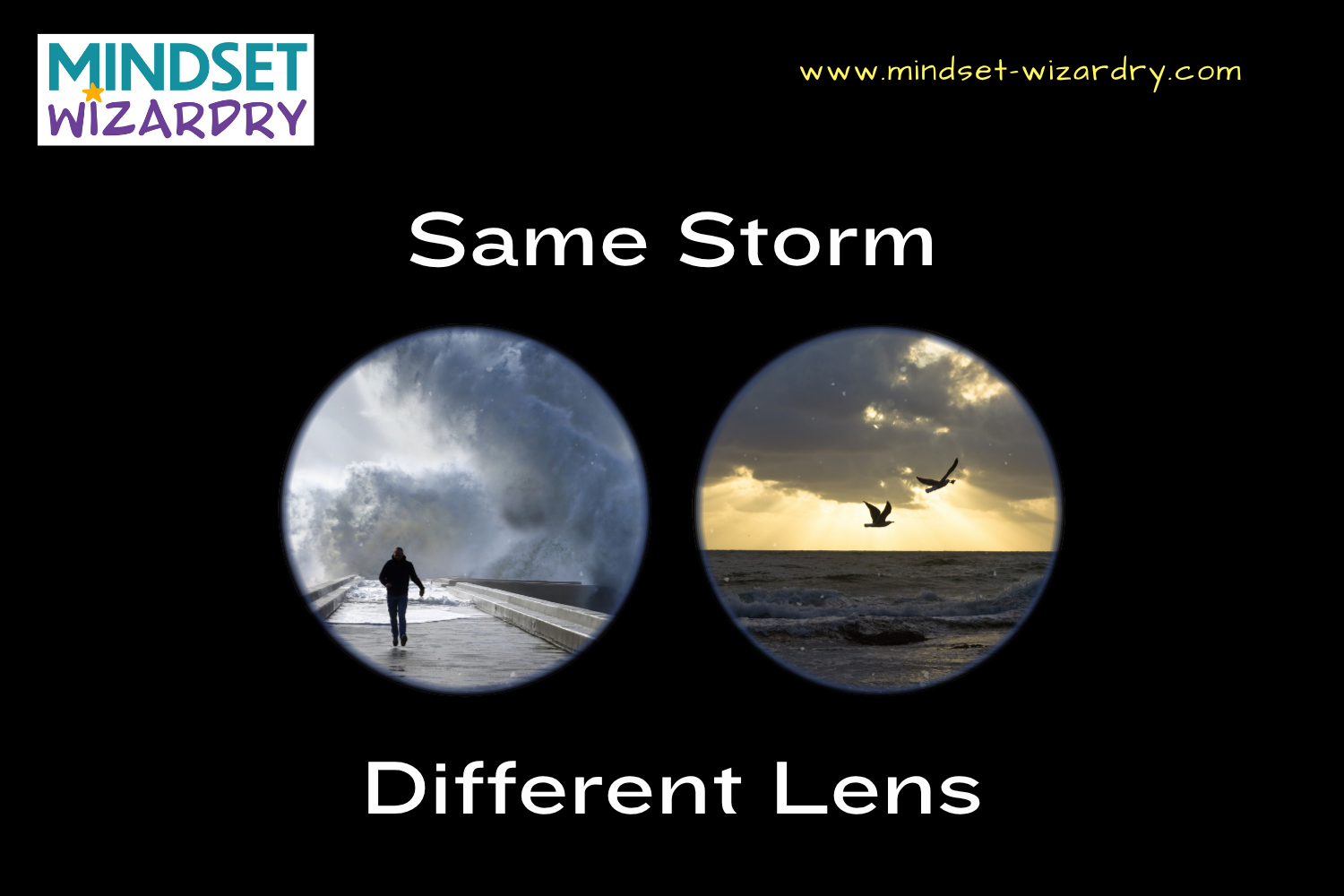
Same Storm, Different Lens
Picture two managers getting the same email on the same Monday morning. Their division is being restructured. Reporting lines are changing. Some roles are being eliminated, others reshaped, and nobody knows yet exactly where the dust will settle.
Manager One reads it twice, feels his stomach drop, and spends the next three weeks bracing for the worst. Manager Two reads the same email, feels the same stomach drop, and then asks a different question: what does this open up?
Same email. Same uncertainty. Same Monday morning. Wildly different outcomes.

Gripping Tighter: How Change Resistance Quietly Takes Over in a VUCA World
When her company’s division announced a major technology overhaul, Maya saw the ripple effects coming before most of her colleagues did. As VP of Human Resources, she'd been through enough change initiatives to recognize the pattern: the quiet uneasiness, the hallway conversations, the sudden spike in "I'm not sure we're ready" from leaders who had been perfectly confident the week before.
What she didn't see coming was how much her own instincts would shape what happened next.

You Don’t Find Thriving, You Practice It.
There's a moment most of us know well. The project finally wraps. The restructure settles. The chaos quiets, just enough to breathe. And somewhere in the back of your mind, a quiet voice says: okay, now I can start thriving.
Except the next thing arrives before that moment ever does.
If you've been waiting for the right conditions to finally feel like you're flourishing, you're not alone. But that waiting might be the very thing keeping thriving out of reach.
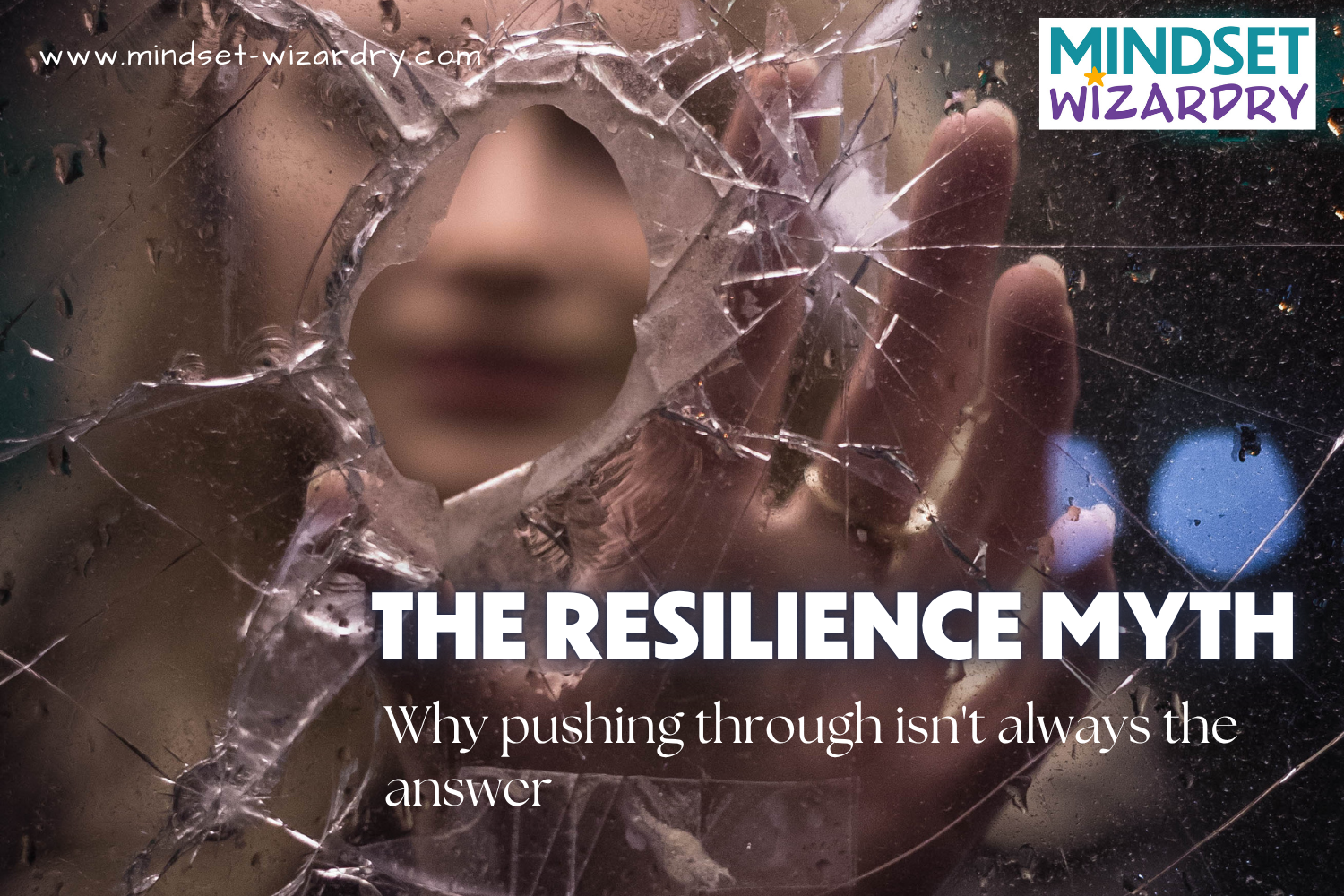
The Resilience Myth That’s Burning Your Best People Out
There's a particular kind of organizational irony that most professionals have experienced but few talk about openly. Resilience shows up in the values statement. It makes an appearance in the leadership competency framework. It gets a line in the annual performance review. Leadership genuinely believes in it.
Then the next promotion cycle happens. And the person who got the nod? The one who worked through a family crisis without missing a beat. The one who absorbed three roles during the layoffs and never complained. The one who, by all outward appearances, simply doesn't struggle.
The values statement stays on the wall. The contradiction stays unaddressed.
This is the resilience gap. And it's costing organizations far more than they realize.
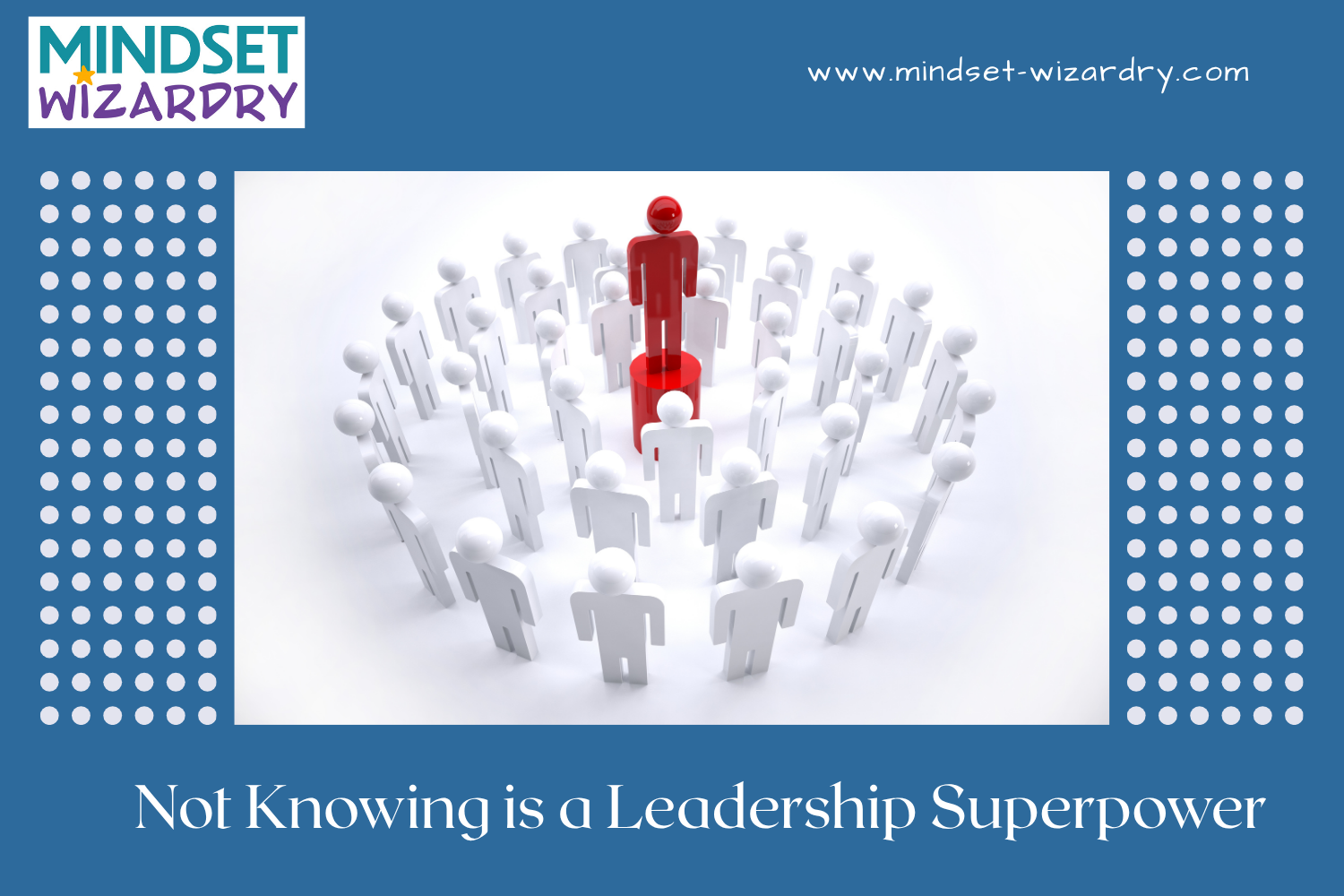
The Courage to Not Know: Why Admitting Uncertainty is a Leadership Superpower
There is a moment most leaders know well. The room goes quiet. Every face turns toward you. The unspoken question hangs in the air: What do we do now?
And somewhere in your chest, the pressure builds. Because you are supposed to know. That is the deal, right? You lead, therefore you have answers.
So, you give one. Even when you are not sure.The meeting ends. The decision gets made. And somewhere downstream, the consequences of that false certainty start to show up.

Your Reactions are Someone Else’s Weather
You didn't mean to bring it into the room.
The morning had already been a lot. A difficult email before your first coffee. A call that ran long and solved nothing. A decision you're still second-guessing sitting somewhere in the back of your mind. By the time you walked into your team meeting, you'd done everything right: composed your face, straightened your posture, pulled up the agenda.
But something traveled in with you anyway. Within minutes, the energy in the room had quietly shifted.

Your Brain on VUCA: Why Mental Health is Your Most Strategic Asset
You are not imagining it. You really are more exhausted than you used to be.
Not because you have gotten weaker. Not because you are handling things poorly. But because the world you are navigating right now is doing something measurable and documented to your brain. Once you understand what that is, "Be Kind to Your Mind" stops being a feel-good phrase and starts being a survival strategy.

What Miles Davis Can Teach You About Leading Through Uncertainty
In the spring of 1959, Miles Davis walked into Columbia Records' 30th Street Studio in New York City with one of the most talented jazz ensembles ever assembled with John Coltrane on tenor saxophone, Cannonball Adderley on alto, Bill Evans on piano, Paul Chambers on bass, and Jimmy Cobb on drums. What he did not bring was a rehearsal plan. Davis had given the band only sketches of scales and melody lines on which to improvise.
What followed across two short sessions became “Kind of Blue,” widely regarded as the greatest jazz album ever recorded, and one of the most influential musical works of the twentieth century. It did not emerge from careful, exhaustive preparation. It emerged from trust, structure, and the creative power of real-time response.
Sound familiar? It should. Because what Miles Davis did in that studio is exactly what the best leaders do when they experience VUCA.

You’ve Navigated Change Before. Here’s Why This Time Feels Different
Picture this: you're sitting in a leadership team meeting, and the situation in front of you feels familiar. Not identical to something you've seen before, but close enough. Your brain is already ahead of the conversation, quietly pulling up case files — the reorg you navigated three years ago, the team friction you resolved before that, the market shift you steered through. You've done this. You know what this looks like.
And then something doesn't land. The approach that worked before doesn't move the needle. The team seems vaguely disengaged. You try harder and get roughly the same result. There's a low hum of frustration that you can't quite name.
That feeling is worth paying attention to. It might not mean you're doing something wrong. It might mean the kind of problem in front of you has changed and the playbook, however excellent, was written for a different game.

Lead Yourself First: The Prerequisite Nobody Talks About
Picture this: You're in a high-stakes meeting. The questions are coming fast, the pressure is visible on every face in the room, and somewhere underneath your composed exterior, your brain has quietly declared a state of emergency. You're nodding, responding, holding the room together. Meanwhile, a much older, much less sophisticated part of your neurology is running calculations it was never designed for.
That's not a leadership failure. That's biology. But knowing the difference between the two — and knowing what to do about it — is where real leadership begins.

The 5 Stories We Tell Ourselves in a Crisis — and What to Do Instead
The email lands on a Tuesday afternoon. A reorg. A key client walking. A market shift that rewrites the rules overnight. Maybe it's not even that dramatic — maybe it's just the slow accumulation of uncertainty that's been building for months, and today something tips.
Before you've finished reading, your brain is already working. Not on solutions. On a story. One that makes sense of what just happened, fast. One that feels true.
That's the part worth paying attention to.

The Stability Paradox: Why Chasing Certainty Makes You More Fragile
There's a peculiar kind of exhaustion that comes not from working too hard, but from waiting too long.
Waiting for the reorganization to settle. For the market to stabilize. For the uncertainty to lift just enough to make a clear decision. We've all been there — holding our breath for a version of normal that keeps getting pushed further down the road.
Here's the uncomfortable truth: that version of normal isn't coming. And the waiting itself is making you weaker.
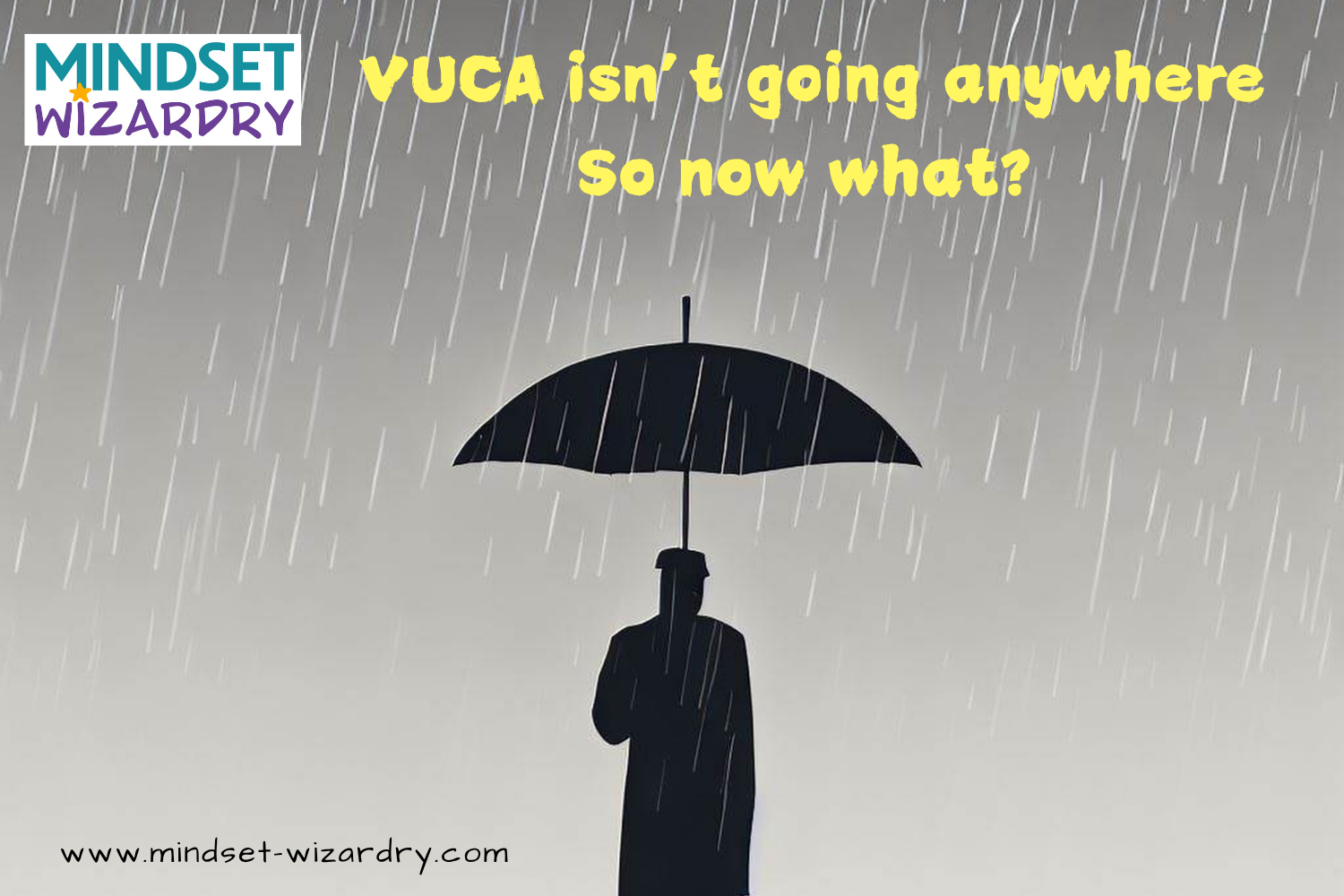
VUCA Isn’t Going Anywhere — So Now What?
Somewhere in the back of your mind, there's a quiet voice. It sounds reasonable, even optimistic. It says: just get through this stretch, and things will settle down.
Maybe the market stabilizes. The reorg completes. The team stops losing people. The world exhales.
Most of us have been waiting for that exhale for a very long time.
Here's the uncomfortable truth that nobody wants to say out loud: the calm isn't coming back. Turbulence is no longer the exception. It's the operating system.

Why Sense-Making Is a Team Sport in a VUCA World
When change happens, a lot of people respond in the same way.
⭐They get busy.
⭐They go quiet.
⭐They keep their heads down and focus on what’s immediately in front of them.
It’s understandable. When things feel uncertain, pulling back can feel like the safest move. Fewer conversations. Fewer questions. Less exposure.
The problem is that silence doesn’t actually reduce uncertainty. It just removes the opportunity to make sense of it together.

New Beginnings in Uncertain Times: Why Growth Starts by Letting Go
We tend to think of new beginnings as something that happens once things calm down.
Once there’s clarity.
Once the path is obvious.
But that’s rarely how change works.

What Elite Athletes Reveal About Resilience, Leadership, and Performing Through Change
If you’ve been watching the Olympics or watched the Super Bowl, it’s tempting to focus on the winning moments - the medals, the trophies, the celebrations.
But resilience rarely announces itself that way.

When Change Feels Personal: Untangling Identity from Circumstance
Organizational change is usually described in strategic terms. New priorities. New structures. New ways of working.
But for the people experiencing it, change often lands somewhere else entirely.

The Leadership Signals People Notice but Rarely Say Out Loud
During uncertainty, people don’t just listen to what’s being said. They pay close attention to how things are happening.
Tone.
Timing.
Pace.
Silence.
These signals shape how people interpret what’s going on - often more than the words themselves. And in moments of change, they influence trust, confidence, and emotional safety in ways leaders don’t always realize.

When Everything Feels Urgent, Nothing Feels Clear
Most people don’t feel overwhelmed because they have too much to do. They feel overwhelmed because they have too much undecided.
In volatile, uncertain, complex, and ambiguous (VUCA) environments, the brain goes into a kind of cognitive hoarding mode. It tries to keep everything “on the radar” just in case it might become important. That instinct makes sense from a survival standpoint… but in modern life, it’s a recipe for exhaustion.

Everyone is familiar with the feelings associated with VUCA, even if they haven’t heard the acronym (Volatility, Uncertainty, Complexity, and Ambiguity).
This blog is dedicated to solving the mysteries associated with VUCA and providing information that will connect you to the magic behind learning to thrive in a VUCA state.